

Turn your data into insight. Let's start with a 40-hour Tableau proof-of-concept for $2,500. Send your brief →
The first time I opened Perplexity, it didn’t feel like a typical AI chatbot or a traditional search engine. It felt like something in between. Instead of giving me a list of links, it immediately generated a structured answer with sources attached, almost like a research assistant working in real time.
What makes Perplexity interesting is its positioning as an “answer engine.” Instead of making you dig through results, it synthesizes information and presents it conversationally with citations. This makes it especially useful for research, quick learning, and fact-checking without jumping across multiple tabs.
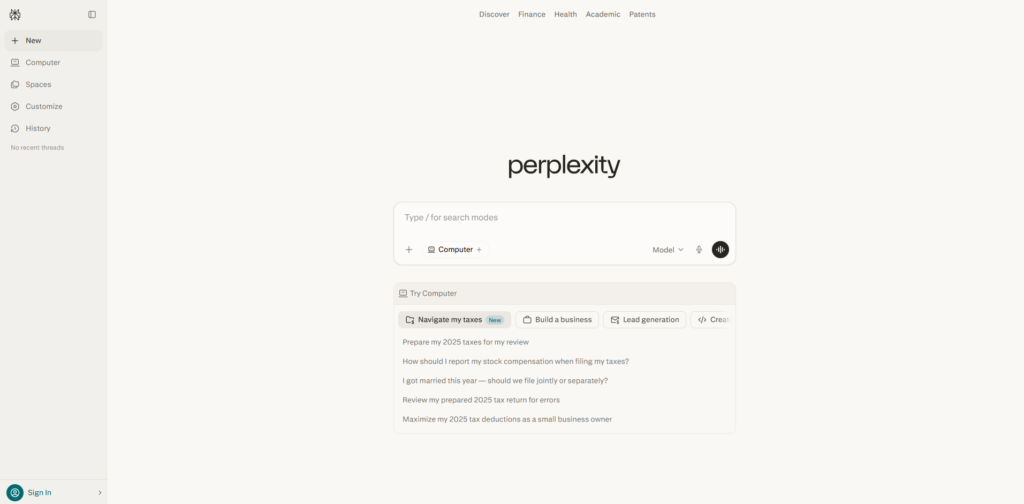
Landing on the homepage, the design is extremely minimal. You’re greeted with a simple input field and very little distraction.
What stood out immediately is how focused it is. There are no overwhelming menus or feature overload. The value proposition is clear within seconds: ask anything, get an answer.
Design-wise, it feels closer to a stripped-down version of Google combined with a chat interface. Clean, fast, and intentional.
You can explore Perplexity here.
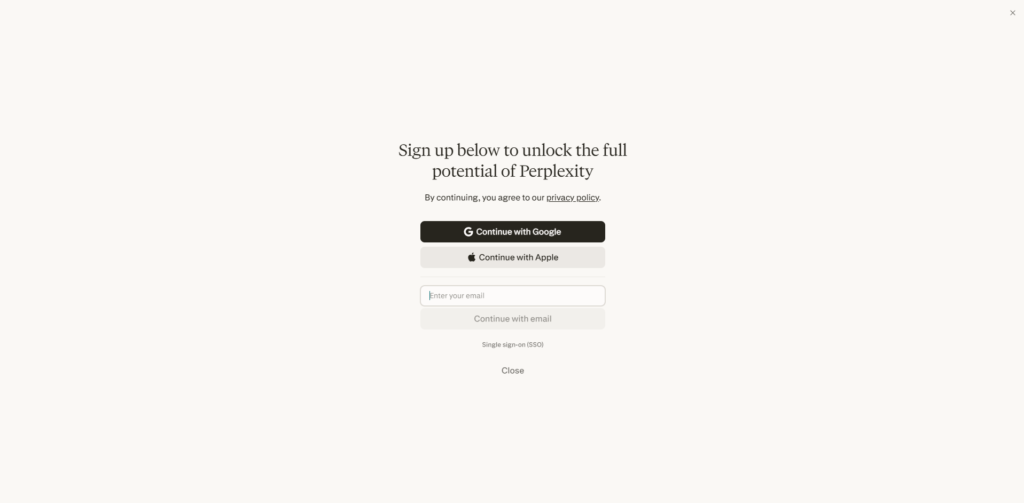
Getting started is frictionless. I was able to use the product without signing up, which immediately lowers the barrier to entry. When I chose to log in, the process took only a few seconds using a standard authentication method.
There is no onboarding tutorial. Instead, the product teaches through usage. I typed my first question and instantly received a structured response with citations. That interaction acts as the onboarding itself.
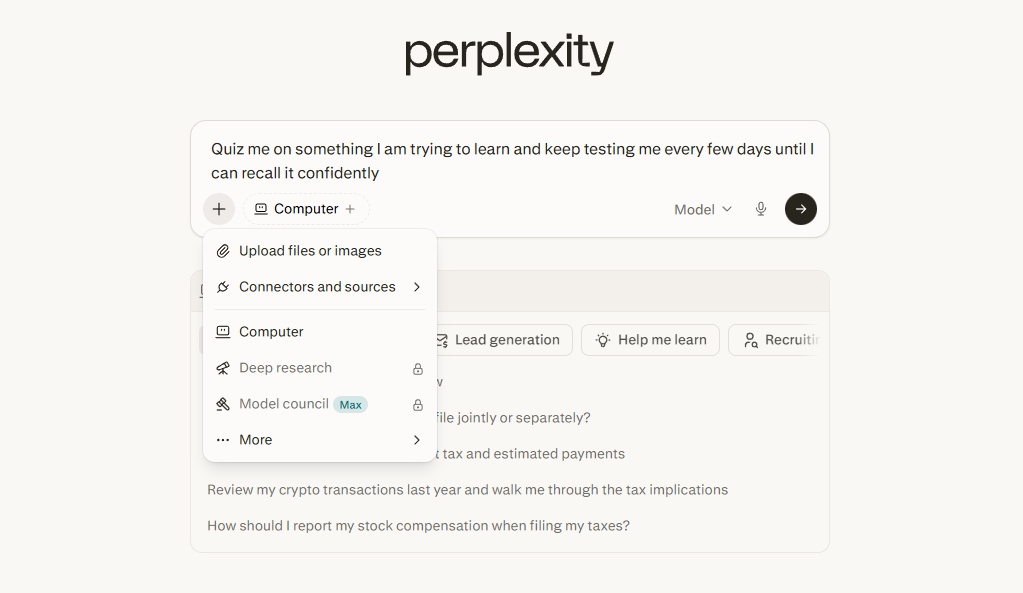
One thing I noticed is that deeper features, such as advanced research modes, are not immediately obvious. They reveal themselves only after continued use, which works well for simplicity but may delay full feature discovery.
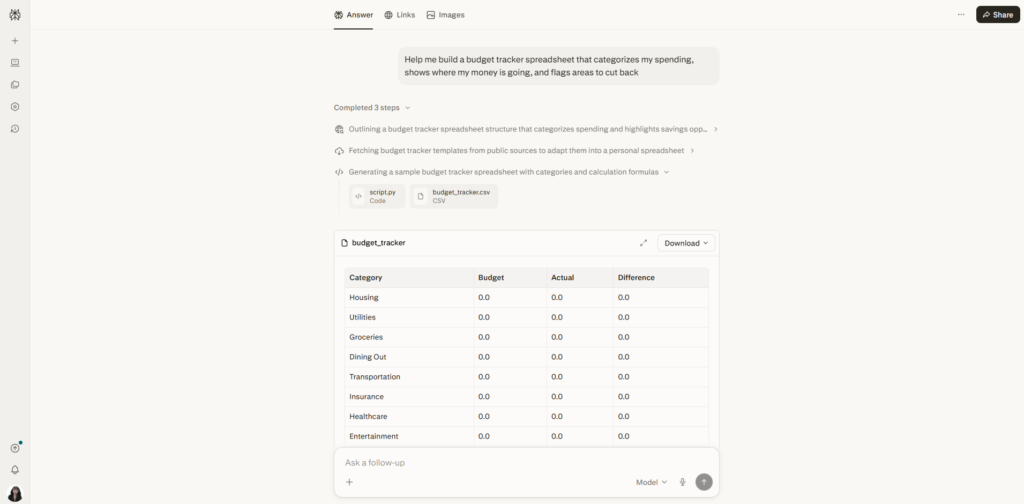
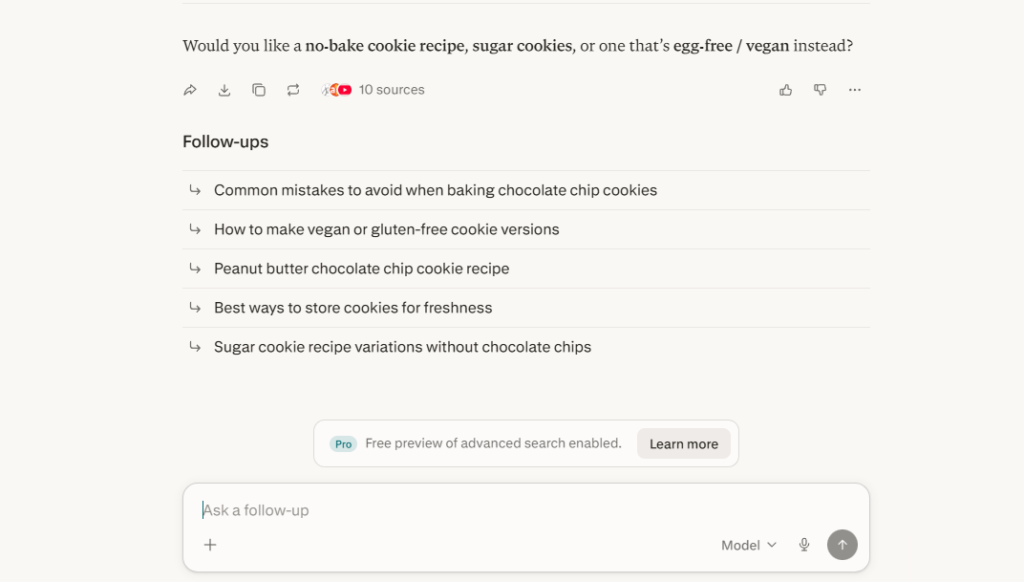
There is no traditional dashboard. The entire interface revolves around the query and response flow. Each question creates a structured output that includes summarized information, visible sources, and suggested follow-up questions.
As I continued interacting, I noticed how readable everything is. Answers are broken into sections, making it easy to scan without losing depth. Sources are always present and clickable, which builds confidence in the output.
The follow-up suggestions guide the experience forward. Instead of thinking about what to ask next, I can simply continue exploring related ideas. This creates a natural research flow that feels more guided than manual.
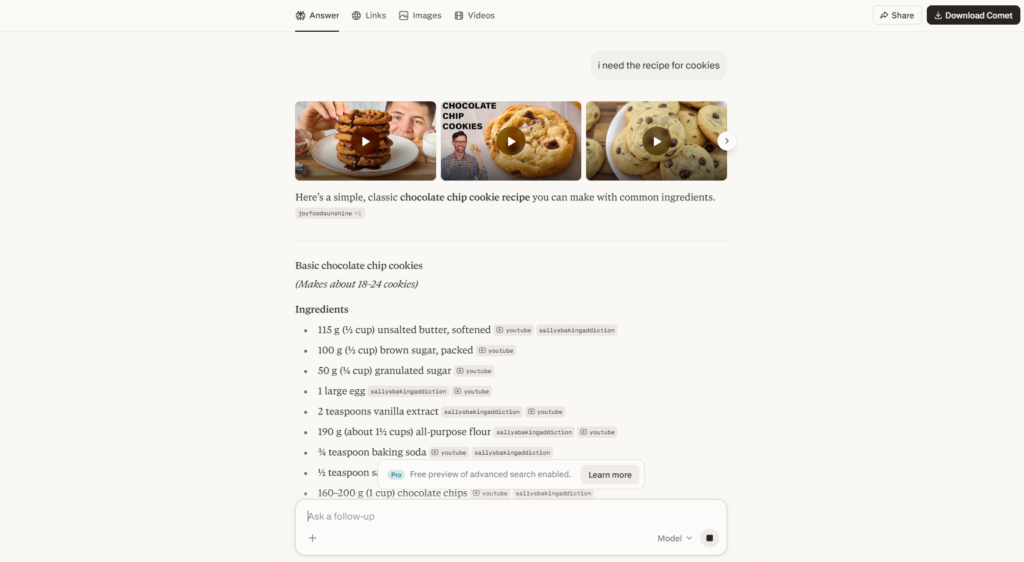
This is the standout feature. Every answer includes sources you can verify.
When I asked a question, it didn’t just respond. It compiled information from multiple places and cited them clearly. That builds trust compared to standard AI tools.
Perplexity is designed to deliver direct answers instead of just links, which significantly reduces research time.
After each answer, it suggests related questions.
I found myself going deeper into topics without needing to think about what to ask next. It creates a natural research flow, almost like guided exploration.
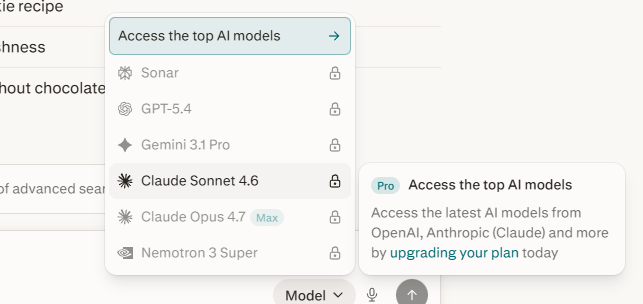
In the Pro version, you can switch between different AI models.
This is useful if you want better reasoning, faster responses, or different styles depending on your task. The platform integrates multiple models rather than relying on just one.
From a UX perspective, Perplexity is highly utilitarian. The interface prioritizes clarity and speed over personality or visual complexity.
One of the most interesting design decisions is how it replaces choice with conclusion. Traditional search engines give multiple links and let users decide. Perplexity presents a synthesized answer supported by evidence. This significantly reduces cognitive load but shifts trust toward the system itself.
For designers, this is a strong example of information hierarchy done right. For developers, it demonstrates how retrieval systems and language models can be combined into a single, seamless interface that feels fast and reliable.
Perplexity likely uses a modern frontend framework such as React or Next.js to deliver a fast and responsive interface. On the backend, it appears to combine real-time retrieval systems with AI processing, likely powered by models from OpenAI and Anthropic.
Infrastructure is likely supported by platforms such as Amazon Web Services, enabling scalable search indexing and fast response delivery.
The key technical strength is how it merges search retrieval with language generation into a single workflow.
Perplexity AI was founded by Aravind Srinivas and a team with strong backgrounds in AI and machine learning. The company is based in San Francisco and focuses on rethinking how people interact with information.
The core idea is simple but powerful. Instead of giving users links to explore, the product aims to deliver direct answers supported by evidence. That philosophy is clearly reflected in how the platform is designed.
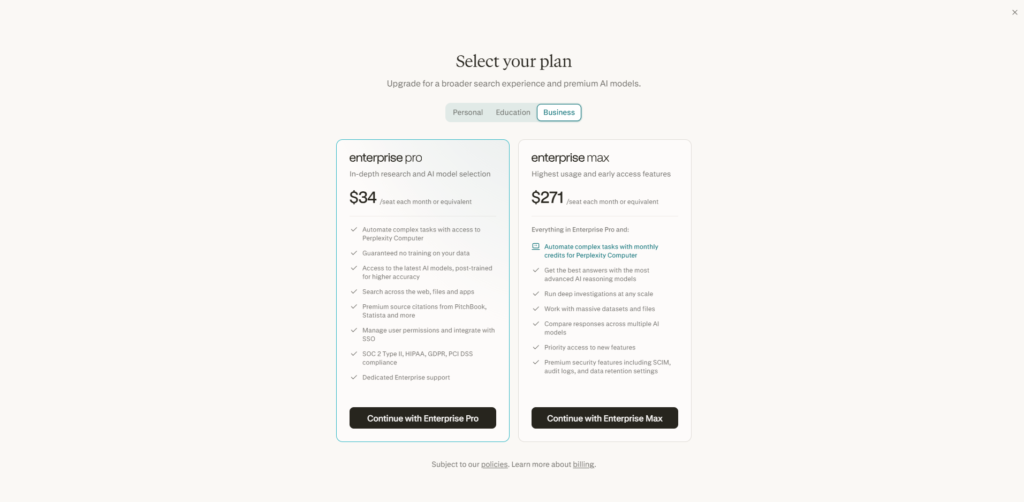
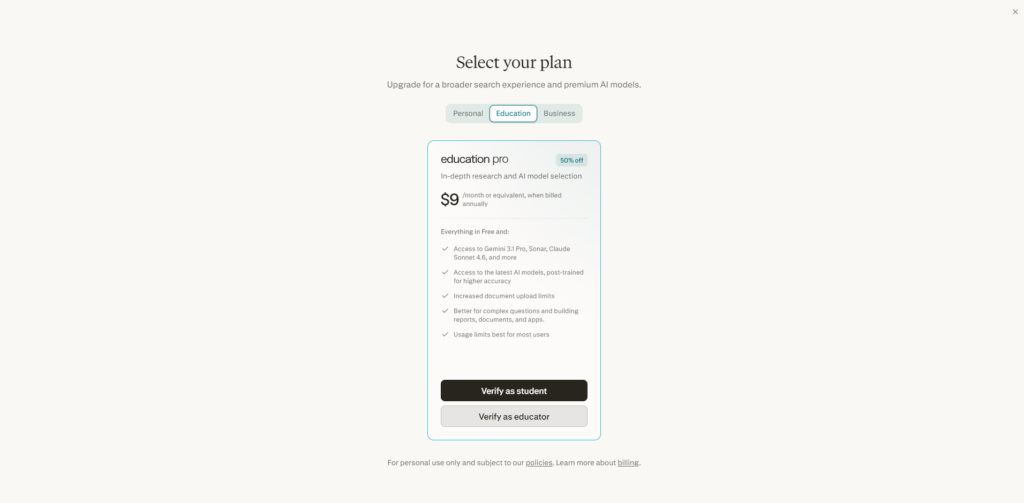
Perplexity follows a freemium model with a clear upgrade path for more advanced usage. The free tier allows full access to basic search functionality, including AI-generated answers with citations. This makes the product immediately useful without requiring payment.
The Pro plan is positioned for users who rely on the platform more heavily. It unlocks deeper research capabilities, access to more advanced AI models, faster responses, and additional features such as file uploads and document analysis. The pricing sits at a level that targets individuals who treat the tool as a daily research assistant rather than occasional users.
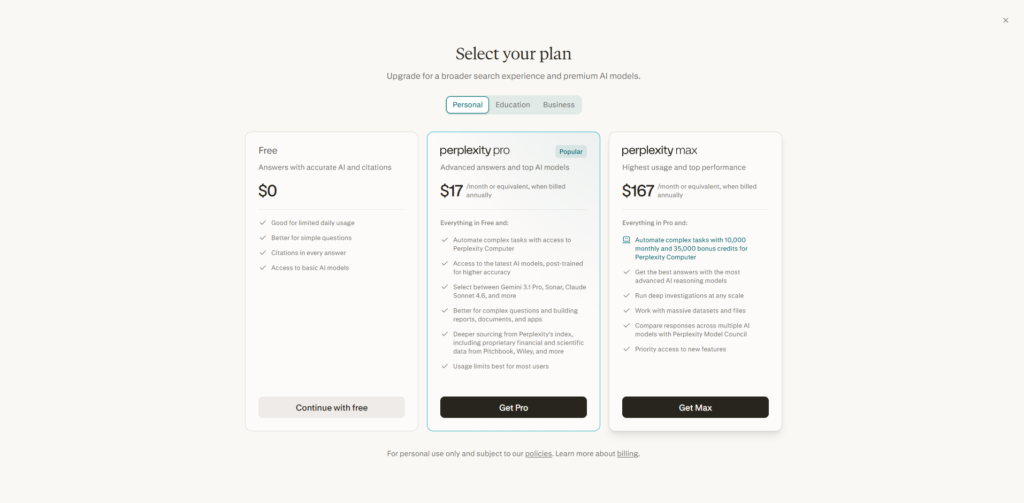
For teams and organizations, enterprise options are available with custom pricing. These include collaboration features, administrative controls, and higher usage limits, indicating a move toward professional and organizational use cases.
This pricing structure clearly reflects a product-led growth strategy. By offering strong functionality for free, Perplexity encourages widespread adoption and habitual use. The paid tier then captures value from users who depend on the tool for deeper, more frequent research. It balances accessibility with monetization in a way that aligns with both casual and professional users.y as a daily research assistant rather than an occasional search tool.
Using Perplexity feels like upgrading the way search works rather than replacing it entirely. It is best suited for users who want fast, structured, and verifiable answers without navigating multiple sources manually.
The biggest strength is how it combines real-time search with AI-generated summaries while maintaining transparency through citations. That combination makes it both efficient and trustworthy.
While it may not replace deep research workflows entirely, it significantly reduces the time needed to understand a topic. For students, writers, and professionals who rely on information daily, it is a tool that quickly becomes part of the workflow.

The Technology newsletter is a weekly digest of tech reviews, columns and headlines from Media Editor Mariebeth De Leus and RoadMap Founder Hoofar Pourzand.
Write to Hoofar at hpourzand@tryroadmap.com or Follow him here.